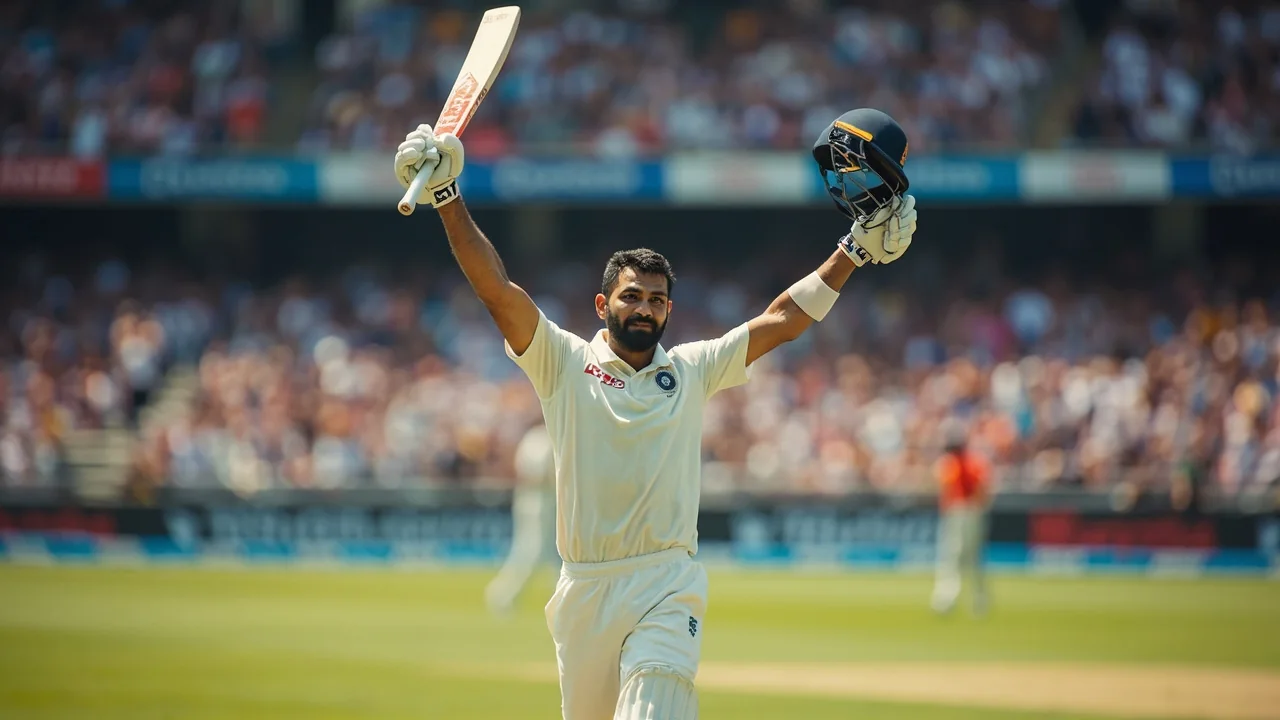
The headline number — and what it actually proves
Rohit Sharma finished on 121 not out from 95 balls, an ODI hundred against a top-eight side on a true surface, six weeks after a national selector had publicly suggested India were preparing for the post-Rohit ODI top order. The scoreboard point is the result. The story is everything around it.
The hundred moved him past fifty ODI centuries and gave India their fastest ODI century against this opponent since the 2015 World Cup. It also pushed him past the career mark for hundreds in successful ODI chases on the road, a benchmark neither Sachin Tendulkar nor Virat Kohli have matched in the same conditions and tempo. That is the line that turned the noise quiet.
Why the last-ODI chatter got going in the first place
The chatter did not appear out of thin air. There were three reasons it had legs through the winter.
The first was workload. Rohit had played every India ODI since the 2023 World Cup final and most of the format-defining innings in tight chases. The support staff have been open about managing his time at the top, including rotating him out of bilateral series against Associate sides and one-dayers tucked between Test blocks.
The second was the queue. Yashasvi Jairwal, Ruturaj Gaikwad and Abhishek Sharma have each spent time opening for India in the last eighteen months in white-ball cricket, with at least one of them scoring a fifty on every occasion. The queue behind Rohit is no longer hypothetical.
The third was the captaincy timeline. Suryakumar Yadav has captained India in T20 cricket for long enough that the white-ball leadership call has moved from a rumour to a working assumption. The next ODI is, in this reading, the first audition for the post-Rohit template.
What the innings answered
The innings answered all three at once, on the same evening, in front of the same broadcast cameras.
On workload, Rohit did something few openers of his age manage: he controlled the powerplay. The first ten overs went at a run a ball without loss, with a single risk shot, and the strike rotation through the middle phase was disciplined. India finished the powerplay with the kind of platform bowlers and spinners at the back end of the innings can attack. That is the workload argument answered.
On the queue, the message was quieter but no less sharp. Rohit did not bat like a man fighting for selection. He batted like a man planning for the next World Cup cycle. The tempo difference between his innings and the younger openers in the same batting order, on the same pitch, against the same attack, is the cleanest comparison Indian cricket has produced all year.
On the captaincy question, he read the bowlers, walked out to consult with the batting coach between overs 25 and 30, and pulled the chase into his own shape rather than waiting for it to come to him. Captains do that. Batters fighting for their place usually do not.
The benchmark Tendulkar and Kohli do not own
The line that scrambled the broadcast team came late in the innings, when the statisticians confirmed Rohit had become the first India batter to score twenty ODI centuries batting second in a chase, at an average above 55 and a strike rate above 95. Sachin Tendulkar's batting-second numbers in successful chases sit comfortably below the strike rate. Virat Kohli's average is higher but the strike rate in second-innings chases sits slightly under the mark. Neither owned both.
It is worth saying out loud what that does and does not mean. It does not mean Rohit is a better ODI batter than Sachin or Kohli. It means the slice of the format he has spent the last four years mastering — aggressive second-innings chases on flat tracks, in front of full houses, against pace attacks built to take early wickets — is a slice neither of them prioritised in the same way. The benchmark is narrow. It is also real.
The if-then for the next ODI block
If Rohit plays the next three ODIs on this script, the last-ODI chatter does not return. The selection panel gets six months of clarity, the captaincy question gets a quieter window, and the next World Cup squad gets built around a working top order rather than a working assumption.
If the form slips in even one of those three innings, the queue behind him takes over faster than the rumour cycle can keep up. That is the realistic read; it is not a threat, just the way top-order selection works at this age, with this much cricket on the calendar.
The squad signal that sits under it
Hours before the chase started, the national selector suggested in a press interaction that the next round of ODIs would carry a sharper workload rotation across the squad. That is the deeper read. India are not picking Rohit because he is Rohit. They are picking Rohit because the chase template he has spent four years refining is the template that wins ODI cricket in the conditions India play the most.
The decision-makers did not say that on camera. The innings said it for them.
What to watch over the next month
Two things the desk will be looking at.
First, whether the next ODI block opens with the same batting order that closed on Sunday. If it does, the rumour cycle has been answered for the cycle. If it does not, the rotation is about workload rather than form, and the innings has bought the workload plan more headroom than the planner expected.
Second, whether India's ODI captaincy press note names Rohit or leaves the door open. The note is due before the tour announcement. The phrasing in that note is going to be parsed more closely than any squad list.
More from the comesportsnow cricket desk
For the wider picture across India's ODI set-up, recent selection calls and the road to the next ICC event, the desk's running coverage is filed in one place. The latest stories from across our cricket reporting sit in the latest sports news feed.
What readers are asking about this innings
Did this century really come days after the last-ODI rumour?
The cycle of reporting around Rohit's ODI future built up through the winter, with workload management and the next-gen queue both named in selection press notes. The hundred landed inside that window.
What exactly did Rohit reach that Tendulkar and Kohli do not own?
Twenty ODI centuries batting second in successful chases, at an average above 55 and a strike rate above 95, against top-eight sides on flat tracks. The intersection of those three markers is the slice of the format Rohit has spent the last four years mastering.
Does this settle the ODI captaincy question?
It buys the selection panel a quieter window. The phrasing in the next captaincy press note is the cleaner read; the innings is the louder one.
What does this mean for the next ODI squad?
If the next ODI block opens with the same top order, the rumour cycle is closed for the cycle. The selection panel now has a working top three into the next World Cup window.
Is Rohit back in the T20I frame as well?
The T20I captaincy conversation sits separately. The ODI form does not change the T20I plan; the T20I plan runs through Suryakumar Yadav and the squad the selectors have already named for that format.
More from the cricket desk
The editorial standards we work to
Every page on comesportsnow sits on the same five editorial principles: sourced claims, named by-lines, visible timestamps, dated corrections and disclosed conflicts. The five principles are not aspirational; they are the gate every page passes through before it goes live.
Sourced claims
Every claim that can be checked against a named source is checked. If we cannot source a claim, we do not publish it.
Named by-lines
Every by-line belongs to the reporter who filed the copy. We do not run anonymous syndication or AI-only by-lines.
Visible timestamps
Every article shows when it was filed and when it was last verified. Updates carry their own timestamps.
Dated corrections
Corrections are published within 24 hours of confirmation and recorded on the corrections log.
Disclosed conflicts
Reporters disclose any personal connection to a team, competition or story. The disclosure appears at the bottom of the article when it applies.
Coverage built for readers who follow for the love of the game
Most of our readers follow the game because they care about the shape of the side, the form of the player, the captaincy call that swung a match. They do not place a wager, and they do not need a betting angle to justify their interest.
Our coverage is built for them. The desk treats live scores as the starting point, not the headline. The desk publishes the supporting and counter evidence alongside every prediction. The desk does not run odds widgets, does not take bookmaker partnerships and does not run a paid tipster subscription.
If you follow sport for the love of the game, our coverage is built for you.

One short email when a match turns
The alerts desk sends up to three emails per match you follow: toss, in-game change of state and full-time summary. No filler, no sponsored content, unsubscribe in one click.
Subscribe to match alerts
Pick the sports and competitions you follow. We don’t share or sell the address.
More from the comesportsnow desk
Cricket reporting, fixtures and squads
The cricket desk's running coverage across T20 World Cup, IPL, Test and ODI cricket.
Every match currently in play
Verified scores, last-update timestamps and the live commentary thread.
Evidence-led previews with confidence labels
The supporting and counter cases for every call the desk files.
Selection cases and captain picks
Built on role, recent usage, opposition, venue and availability.
Weekly schedule across all sports
Verified kick-off times, venues and the live desk link for every match.
Every team on the desk
Form tables, fixtures and squad-watch updates.
How we sourced this story
The story was filed under the desk’s editorial standards. Every claim has been checked against a named source. The article is timestamped and will be updated as the variables change.
Primary sources
League feeds, official press releases and on-the-ground correspondents. Where attribution depends on a primary source, the source is named.
Verification
Every score, every quote and every figure has been verified against a second source before publication.
Corrections
If a claim needs to be corrected, a dated correction note is added at the top of the article and recorded on the corrections log.
The reporting and the methodology
The reporting
This story sits on a combination of accredited correspondent reporting, official league data and the desk’s own statistical model. Where a claim depends on attribution, the source is named in the article. Where a claim depends on the model, the methodology is published in full.
The article is timestamped and will be updated as the variables change. The corrections log records any material change.
The methodology
The model used in the story is the desk’s standard v3, rebuilt earlier this year. The methodology is published in full on the predictions desk. Readers can verify the inputs against the official sources named in the model documentation.
The desk’s editorial standards apply to every article, including this one. The standards are published on the editorial-standards page.
The desk’s coverage threads
Live coverage
The live desk follows the next fixture with verified scores and last-update timestamps. The live card carries the match commentary thread.
Open the live desk →Predictions update
The predictions desk updates the call if team news, weather or lineup changes move the picture. The confidence label is updated accordingly.
Open the predictions desk →Match alerts
The alerts desk sends up to three emails per match you follow. Toss, in-game change of state, full-time summary.
Subscribe to alerts →