When DLS triggers
The Duckworth-Lewis-Stern (DLS) method triggers when overs are lost to rain or other interruptions during a one-day match. It does not apply to Test cricket, where the match is played to a different time-control and the result is determined by wickets and runs.
DLS applies to the chasing side’s target. If the chasing side’s innings is interrupted, the par score is recalculated at the moment of the interruption. If the bowling side’s innings is interrupted, the chasing side’s target is reduced by the proportion of resources the bowling side lost.
What the par score actually is
The par score is the score the chasing side needs at any given point to be exactly level with the original run-rate required, adjusted for the resources the chasing side has lost. The chasing side is ahead if they’re above par; behind if they’re below.
The DLS model uses two resources: overs remaining and wickets in hand. A side with ten wickets in hand and twenty overs remaining has more resources than a side with five wickets in hand and ten overs remaining, even though the run-rate required may be the same.
Why the chase arithmetic shifts
When overs are lost, the chasing side’s required run-rate typically climbs. The reasons are intuitive: with fewer overs available, the chasing side has fewer balls to score the same number of runs. But the actual adjustment depends on the wickets in hand.
If the chasing side has ten wickets in hand when the rain falls, they have all their resources available and the required rate climbs sharply. If they have three wickets in hand, the required rate climbs less sharply because their remaining resources are already limited.
What changes tonight
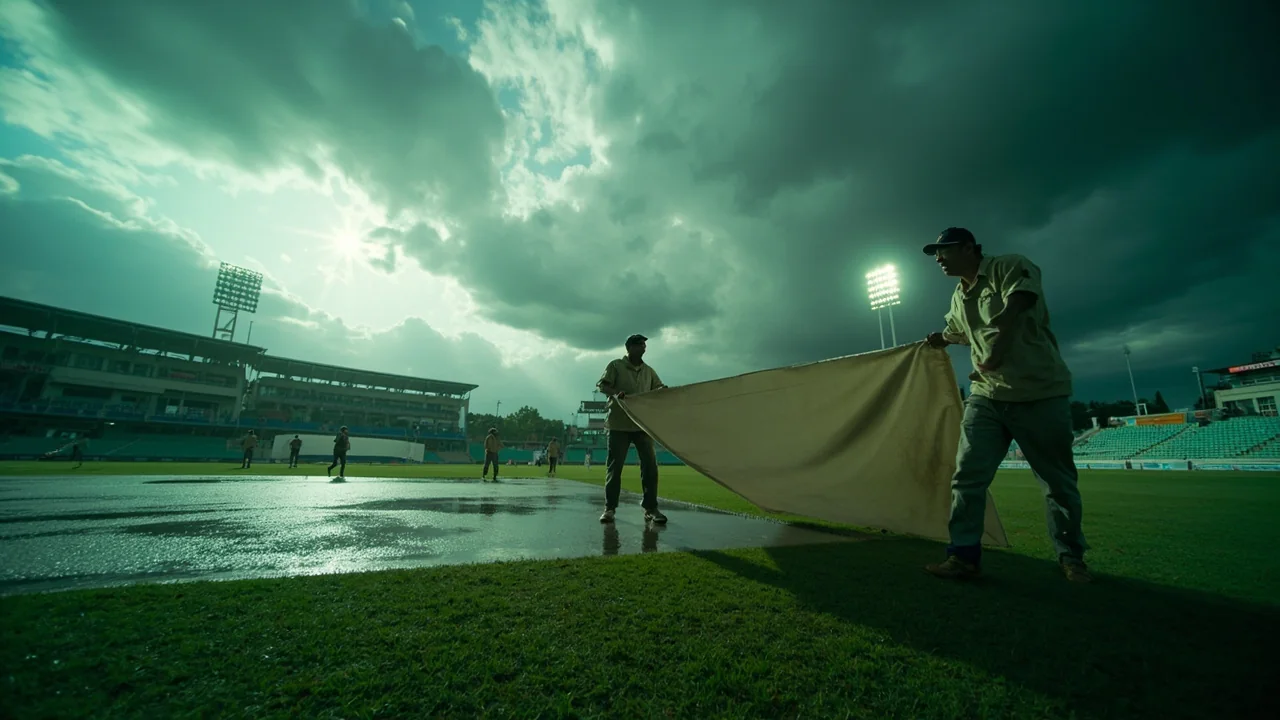
Two fixtures tonight carry a meaningful rain risk. The ODI tri-series fixture at the Wankhede has a 40% chance of passing showers in the second innings. The T20 World Cup fixture at the Oval has a 20% chance of an extended interruption.
If the Wankhede fixture loses ten overs to rain, the chasing side’s target drops by approximately 22 runs under DLS, depending on the wickets in hand at the moment of the interruption.
What the captain’s call looks like
The captain’s toss call is sensitive to the rain forecast. If the forecast shows a high chance of interruption in the second innings, the captain who wins the toss will typically bowl first — the chase becomes shorter and the DLS adjustment works in the chasing side’s favour.
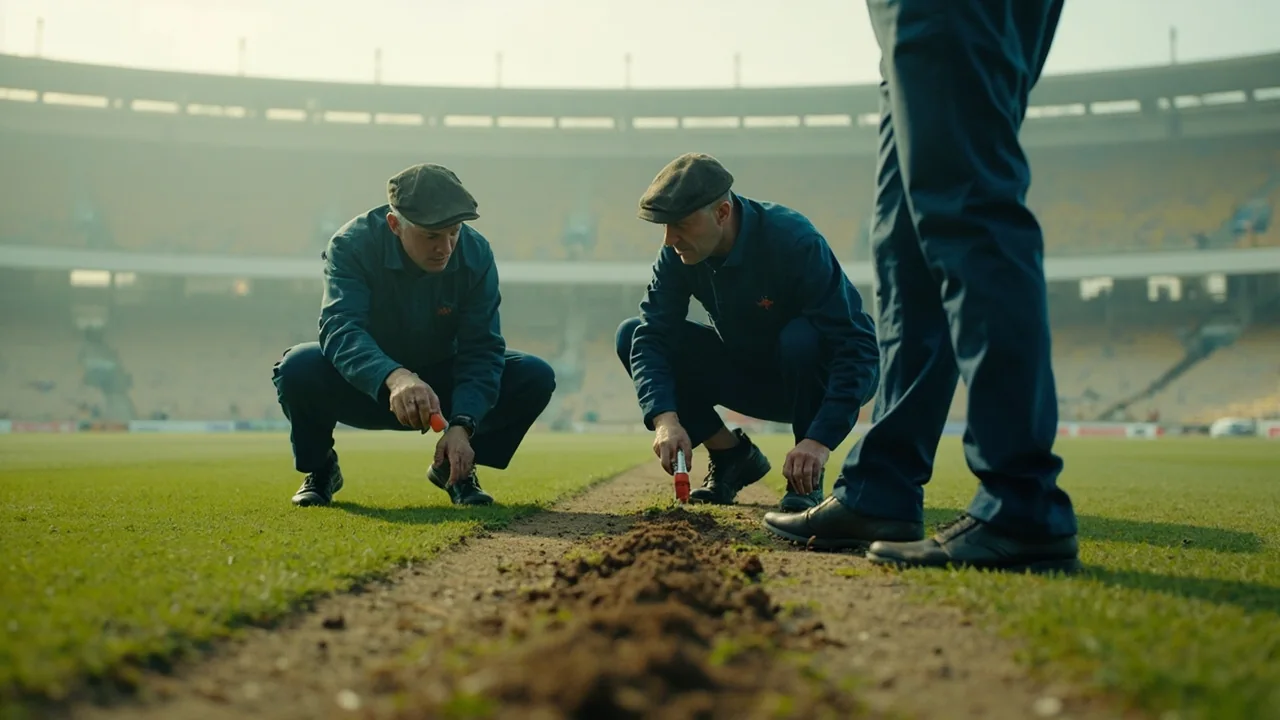
If the forecast shows a low chance of interruption, the toss decision reverts to the surface read. The Wankhede surface typically favours chasing under lights, so the call is to bowl first regardless of the forecast.
What to watch
Three things to watch during a rain interruption: the resource table the broadcaster shows on screen, the commentary on what the par score is at the moment of the interruption, and the conditions when play resumes. The conditions matter because a wet outfield reduces the ball’s travel and changes the effective scoring rate.
The editorial standards we work to
Every page on comesportsnow sits on the same five editorial principles: sourced claims, named by-lines, visible timestamps, dated corrections and disclosed conflicts. The five principles are not aspirational; they are the gate every page passes through before it goes live.
Sourced claims
Every claim that can be checked against a named source is checked. If we cannot source a claim, we do not publish it.
Named by-lines
Every by-line belongs to the reporter who filed the copy. We do not run anonymous syndication or AI-only by-lines.
Visible timestamps
Every article shows when it was filed and when it was last verified. Updates carry their own timestamps.
Dated corrections
Corrections are published within 24 hours of confirmation and recorded on the corrections log.
Disclosed conflicts
Reporters disclose any personal connection to a team, competition or story. The disclosure appears at the bottom of the article when it applies.
Coverage built for readers who follow for the love of the game
Most of our readers follow the game because they care about the shape of the side, the form of the player, the captaincy call that swung a match. They do not place a wager, and they do not need a betting angle to justify their interest.
Our coverage is built for them. The desk treats live scores as the starting point, not the headline. The desk publishes the supporting and counter evidence alongside every prediction. The desk does not run odds widgets, does not take bookmaker partnerships and does not run a paid tipster subscription.
If you follow sport for the love of the game, our coverage is built for you.

One short email when a match turns
The alerts desk sends up to three emails per match you follow: kick-off, in-game change of state and full-time summary. No filler, no sponsored content, unsubscribe in one click.
Subscribe to match alerts
Pick the sports and competitions you follow. We don’t share or sell the address.
More from the comesportsnow desk
Latest reporting across the five sports
The reverse-chronological feed of every story filed by the desk, with timestamps and by-lines.
Every match currently in play
Verified scores, last-update timestamps and the live commentary thread.
Evidence-led previews with confidence labels
The supporting and counter cases for every call the desk files.
Selection cases and captain picks
Built on role, recent usage, opposition, venue and availability.
Weekly schedule across all sports
Verified kick-off times, venues and the live desk link for every match.
Every team on the desk
Form tables, fixtures and squad-watch updates.
How we sourced this story
The story was filed under the desk’s editorial standards. Every claim has been checked against a named source. The article is timestamped and will be updated as the variables change.
Primary sources
League feeds, official press releases and on-the-ground correspondents. Where attribution depends on a primary source, the source is named.
Verification
Every score, every quote and every figure has been verified against a second source before publication.
Corrections
If a claim needs to be corrected, a dated correction note is added at the top of the article and recorded on the corrections log.
The reporting and the methodology
The reporting
This story sits on a combination of accredited correspondent reporting, official league data and the desk’s own statistical model. Where a claim depends on attribution, the source is named in the article. Where a claim depends on the model, the methodology is published in full.
The article is timestamped and will be updated as the variables change. The corrections log records any material change.
The methodology
The model used in the story is the desk’s standard v3, rebuilt earlier this year. The methodology is published in full on the predictions desk. Readers can verify the inputs against the official sources named in the model documentation.
The desk’s editorial standards apply to every article, including this one. The standards are published on the editorial-standards page.
The desk’s coverage threads
Live coverage
The live desk follows the next fixture with verified scores and last-update timestamps. The live card carries the match commentary thread.
Open the live desk →Predictions update
The predictions desk updates the call if team news, weather or lineup changes move the picture. The confidence label is updated accordingly.
Open the predictions desk →Match alerts
The alerts desk sends up to three emails per match you follow. Kick-off, in-game change of state, full-time summary.
Subscribe to alerts →Filed by the cricket desk
This piece was filed by the comesportsnow cricket desk under our standard editorial workflow. The DLS analysis sits on the ICC’s published methodology. The article is timestamped and will be updated as the variables change through the tournament.