
Matches tracked86This match-week
Reports filed22Across 6 leagues
Squad pages14Updated this week
xG modelv3Methodology published
Competitions we cover
Where the football desk reports from
Premier League
MD-by-MD reporting, table implications and the tactical reads that drive the run-in.
Open →La Liga
Title race, European spots and the title-defence narrative through the spring.
Open →Champions League
Knockout rounds, group-stage scenarios and the tactical previews across the bracket.
Open →Indian Super League
ISL coverage with squad watch, transfer window reporting and the title race read.
Open →
The shape of the game
Why we write about the press before the goals
Goals settle the scoreboard. The press settles the next twenty minutes. Our football reporting treats the press trigger, the half-space rotation and the set-piece routine as the headline, not the footnote.
It is the only way to read a match that doesn’t have the ball for sixty minutes of the ninety. Once you can name the press, the half-spaces and the rest-defence, the scoreboard reads differently the second time around.
Read the explainer
Latest from the football desk
Reporting filed in the last few hours
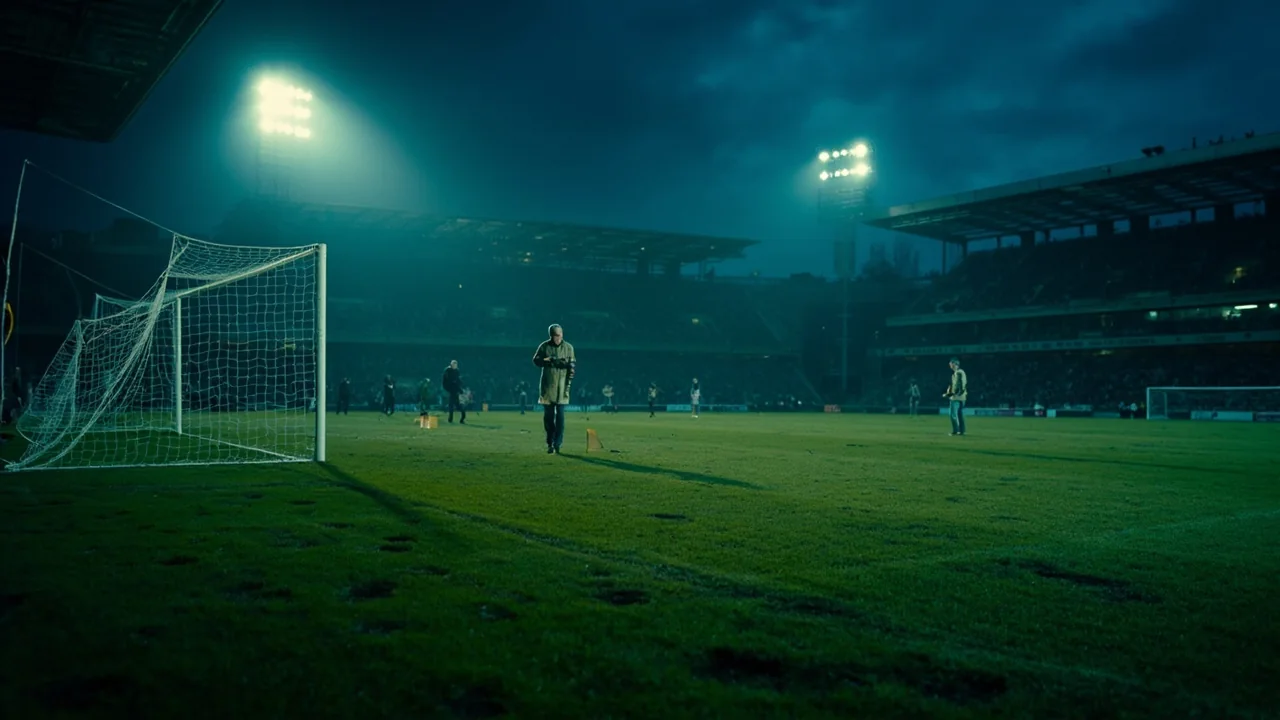
The half-space rotations behind the press — and why they aren’t working
Read the analysis
Inside a Tuesday training session: how the back four is being rotated
Read the report
Standings
Where the title races sit tonight
Premier League
| Pos | Club | P | GD | Pts |
|---|---|---|---|---|
| 1 | Arsenal | 17 | +24 | 38 |
| 2 | Manchester City | 17 | +21 | 36 |
| 3 | Liverpool | 17 | +18 | 34 |
| 4 | Aston Villa | 17 | +12 | 32 |
Indian Super League
| Pos | Club | P | GD | Pts |
|---|---|---|---|---|
| 1 | Mohun Bagan | 12 | +14 | 28 |
| 2 | Mumbai City | 12 | +9 | 24 |
| 3 | Bengaluru FC | 12 | +6 | 22 |
| 4 | Goa | 12 | +5 | 20 |
Match alerts
Goals, red cards, and the changes that matter
One short alert when the match turns. Built for readers who want to know what changed and why — not a notification every thirty seconds.
How we read a match
The five-step framework our football desk uses
Every football preview, report and tactical read on the site sits on the same five-step framework. The order of priority changes by competition, but the five steps are consistent.
1
The press shape
Where does the team press? How high? And what is the trigger that initiates the press? The press shape is the foundation of everything else.
2
The half-space rotations
How does the team move the ball into the half-spaces? Which player receives, who attacks the channel behind, and what does the receiving player’s body shape tell us about the next pass?
3
The rest-defence
When possession is lost, what does the team shape look like? How compact is the back four? Where is the defensive midfielder positioned? The rest-defence is what stops fast breaks.
4
The set-piece routines
Both attacking and defensive. Set-pieces win tight matches; the football desk treats them as a primary reporting thread, not a footnote.
5
The transitions
Both directions. The counter-press and the counter-attack. The fastest goals come from transitions, and the football desk treats the first six seconds after possession changes as a separate reporting thread.
The desk rhythm
What the football desk files through a typical week
Premier League previews10Per match-week
Tactical reads4Mid-week
Match reports22Per week
Squad-watch notes8Per week
The tactical vocabulary
Eight terms our football desk uses, and what they mean
The football desk uses a consistent vocabulary across previews, reports and tactical reads. The eight terms below are the ones readers ask about most often.
Press trigger
The specific cue that initiates a team’s press. Common triggers: a back-foot pass to the centre-backs, a side-foot pass to the full-back, a heavy first touch from the receiving player.
Rest-defence
The defensive shape a team takes when possession is lost. A team with a strong rest-defence limits fast breaks; a team with a weak rest-defence concedes transition chances.
Half-space
The zone between the centre of the pitch and the touchline. The half-space is where most modern attacking play happens because the receiving player has more passing angles than in the wide areas.
Inverted full-back
A full-back who tucks inside into the defensive midfield zone when the team is in possession. Inverted full-backs create numerical superiority in the middle of the pitch but expose the wide channels in transition.
PPDA
Passes Per Defensive Action. The average number of opposition passes between a team’s defensive interventions. A lower PPDA indicates a higher press.
xG
Expected Goals. The probability that a shot results in a goal, calculated from the shot’s location, the body part used and the defensive pressure. xG is the cleanest single measure of chance quality.
Counter-press
The immediate press applied after possession is lost, designed to win the ball back within five seconds. Strong counter-press limits transition chances for the opposition.
Set-piece routine
A rehearsed movement pattern off a corner or free kick. Set-piece routines win tight matches; the football desk treats them as a primary reporting thread.
How we cover the run-in
What changes in our reporting when the title race tightens
Through the run-in, the football desk increases the density of tactical reads and the frequency of squad-watch notes. The shift is intentional: the run-in is when the tactical detail starts to compound.
Squad rotation is read closely
With three matches a week through the busiest stretch, the rotation pattern becomes the story. Which player is being rested, which is being asked to play every minute, and which is being held back for a specific fixture.
Set-piece routines are tracked
Through the run-in, set-piece routines become more visible. The desk tracks new routines added in the final weeks and the adjustments made to existing routines.
Press triggers are named
The press trigger is the highest-leverage defensive decision a coach makes. Through the run-in, the desk names the trigger for every match preview and tracks whether the trigger holds.
How we work
The editorial standards we work to
Every page on comesportsnow sits on the same five editorial principles: sourced claims, named by-lines, visible timestamps, dated corrections and disclosed conflicts. The five principles are not aspirational; they are the gate every page passes through before it goes live.
Sourced claims
Every claim that can be checked against a named source is checked. If we cannot source a claim, we do not publish it.
Named by-lines
Every by-line belongs to the reporter who filed the copy. We do not run anonymous syndication or AI-only by-lines.
Visible timestamps
Every article shows when it was filed and when it was last verified. Updates carry their own timestamps.
Dated corrections
Corrections are published within 24 hours of confirmation and recorded on the corrections log.
Disclosed conflicts
Reporters disclose any personal connection to a team, competition or story. The disclosure appears at the bottom of the article when it applies.
What sport means to us
Coverage built for readers who follow for the love of the game
Most of our readers follow the game because they care about the shape of the side, the form of the player, the captaincy call that swung a match. They do not place a wager, and they do not need a betting angle to justify their interest.
Our coverage is built for them. The desk treats live scores as the starting point, not the headline. The desk publishes the supporting and counter evidence alongside every prediction. The desk does not run odds widgets, does not take bookmaker partnerships and does not run a paid tipster subscription.
If you follow sport for the love of the game, our coverage is built for you.

Stay close to the desk
One short email when a match turns
The alerts desk sends up to three emails per match you follow: kick-off, in-game change of state and full-time summary. No filler, no sponsored content, unsubscribe in one click.
Subscribe to match alerts
Pick the sports and competitions you follow. We don’t share or sell the address.
The four competitions
What we cover across football
Premier League
MD-by-MD coverage from August through May. The title race, the European spots, the relegation picture and the cup competitions all carry the same depth.
La Liga
The Spanish top flight. The title-defence narrative, the European spots and the tactical story of the season are the three threads the desk follows.
Champions League
The group stage through to the final. The bracket, the scenarios, the tactical previews and the knockout round reporting all carry the same depth as the domestic coverage.
Indian Super League
The ISL season. The title race, the playoff scenarios and the Indian-player watch carry the same depth as the European leagues.
Serie A & Bundesliga
The Italian and German top flights get fixture lists and the major tactical reads, with deeper coverage of the title races and the Champions League contenders.
FA Cup & Carabao Cup
The English cup competitions. The cup runs alongside the league schedule with its own preview and report cycle.
The xG model
How we use expected goals
Our football desk publishes an expected-goals (xG) model alongside the tactical reads. The model is built on shot location, body part and defensive pressure. We publish the model methodology in full so readers can verify the inputs.
The model is the desk’s v3, rebuilt in early 2026. The model is updated after every match-week with the new figures and the recalibrated coefficients.