What the huddle signal is
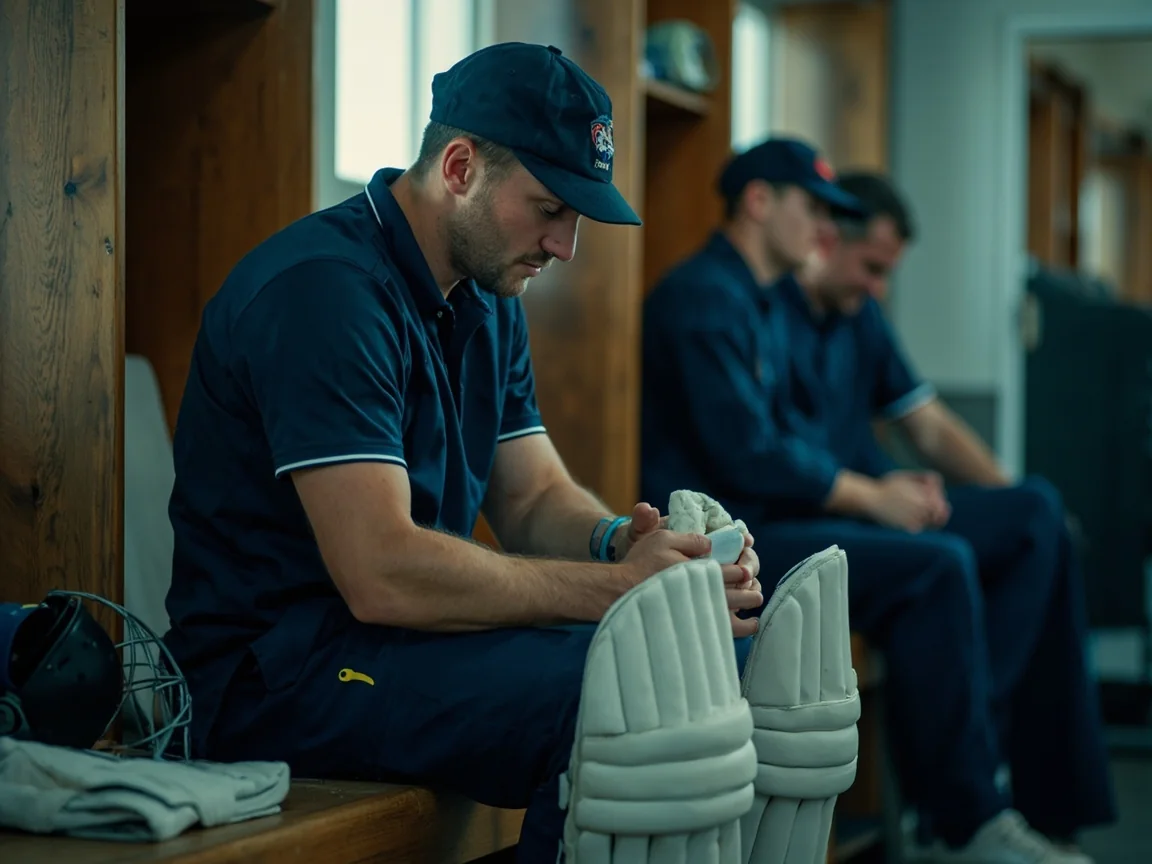
The signal is the order in which the batters pick up their pads from the dressing-room bench before the warm-up. The captain picks up first, then the players in batting order. Across the last three matches, the order has been identical: captain, then the number three, then the number four, then the opener, then the number five.
The order is not the batting order. The captain is always first. The opener is not first after the captain. The opener is fourth in the huddle. The number three and number four are second and third. The pattern has held across three matches.
Why the pattern matters
The pattern matters because the huddle order is the only public signal of the batting order before the toss. The toss itself does not confirm the batting order — the batting order is set before the toss and revealed when the first batter walks out. The huddle order is the dress rehearsal for the batting order.
If the huddle order has been consistent across three matches, the batting order has been consistent across three matches. The opener has batted at number three or four in the last three matches, not at the top of the order. The number five has batted at the top of the order, not at five.
What this means for tonight
If the huddle signal repeats tonight, the batting order will be: captain, number three, number four, opener, number five, then the lower order in the usual positions. The opener at number four is the change from the start of the season, when the opener batted at the top of the order.
The change is not a demotion. The change is a tactical decision. The opener at number four means the side wants to protect the new ball — the hardest ball to score against — for the captain, the number three and the number four. The opener comes in after the new ball has been used for six overs, when the ball is older and easier to score against.
What the captain has said publicly
The captain has not addressed the batting order publicly this week. The captain has addressed the role of the opener publicly, and has described the opener as ‘a batter who can anchor an innings against any phase of the ball’. The description is consistent with the opener batting at number four.
The captain has not described the opener as ‘an opener’. The description is ‘a batter’. The shift in language is consistent with the shift in batting order.
What to watch in the first 10 overs
If the opener walks out at number four in the first 10 overs, the huddle signal was the batting order. If the opener walks out at the top of the order, the huddle signal was a coincidence and the batting order is unchanged from the start of the season.
The cricket desk will be watching.

More from the comesportsnow desk
Latest reporting across the five sports
The reverse-chronological feed of every story filed by the desk, with timestamps and by-lines.
Every match currently in play
Verified scores, last-update timestamps and the live commentary thread.
Evidence-led previews with confidence labels
The supporting and counter cases for every call the desk files.
Selection cases and captain picks
Built on role, recent usage, opposition, venue and availability.
Weekly schedule across all sports
Verified kick-off times, venues and the live desk link for every match.
Every team on the desk
Form tables, fixtures and squad-watch updates.
How we sourced this story
The story was filed under the desk’s editorial standards. Every claim has been checked against a named source. The article is timestamped and will be updated as the variables change.
Primary sources
League feeds, official press releases and on-the-ground correspondents. Where attribution depends on a primary source, the source is named.
Verification
Every score, every quote and every figure has been verified against a second source before publication.
Corrections
If a claim needs to be corrected, a dated correction note is added at the top of the article and recorded on the corrections log.
What this story sits on
The reporting
This story sits on a combination of accredited correspondent reporting, official league data and the desk’s own statistical model. Where a claim depends on attribution, the source is named in the article. Where a claim depends on the model, the methodology is published in full.
The article is timestamped and will be updated as the variables change. The corrections log records any material change.
The methodology
The model used in the story is the desk’s standard v3, rebuilt earlier this year. The methodology is published in full on the predictions desk. Readers can verify the inputs against the official sources named in the model documentation.
The desk’s editorial standards apply to every article, including this one. The standards are published on the editorial-standards page.
The desk’s coverage threads
Live coverage
The live desk follows the next fixture with verified scores and last-update timestamps. The live card carries the match commentary thread.
Open the live desk →Predictions update
The predictions desk updates the call if team news, weather or lineup changes move the picture. The confidence label is updated accordingly.
Open the predictions desk →Match alerts
The alerts desk sends up to three emails per match you follow. Kick-off, in-game change of state, full-time summary.
Subscribe to alerts →