What the return-of-serve pattern is
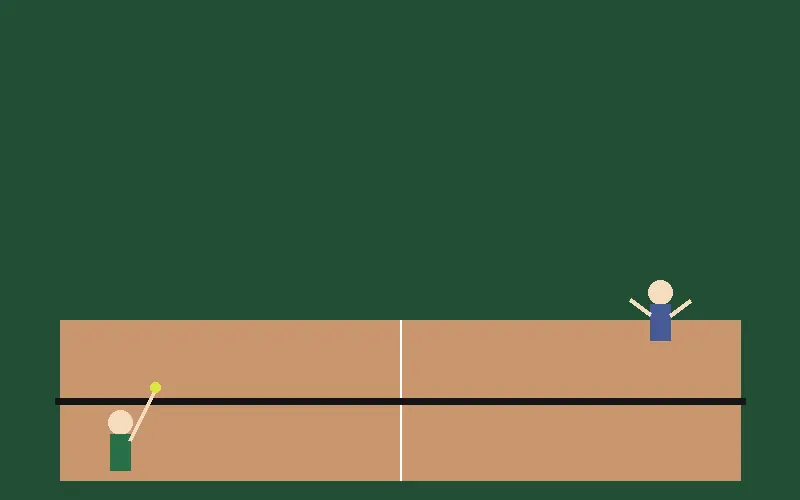
The pattern is simple. The returner stands two feet further back than the baseline on the deuce side and splits the return position on the ad side. The body shape is a closed stance, weight on the back foot, racket head up and held high. The first step is a small jab toward the ball, not a full transfer. The second step is the strike.
The pattern produces a return that sits between the opponent's feet and the service line, not deep to the baseline. The returner is not trying to win the point on the return. The returner is trying to take the server's first groundstroke away.
Why it works against a heavy first serve
Against a heavy first serve, deep returns are a mistake. A heavy first serve kicks up to shoulder height. A deep return from the baseline hits the back fence or sails long. The returner has to come in to find a shorter return, which is exactly what the pattern asks for.
The jab step closes the distance to the ball. The closed stance absorbs the pace. The return sits short. The server is now hitting a forehand from inside the baseline, on the back foot, with the returner already moving forward.
Why it works against a slice serve
Against a slice serve, the pattern is even more effective. A slice serve pulls the returner wide on the deuce side and skids low. A deep return from the baseline has to clear the net by six inches and land in the back third. The margin for error is small.
Coming in two feet, the returner can take the ball at thigh height and play a flatter return down the middle. The slice serve is designed to pull the returner wide. The pattern answers by attacking the middle of the court, which is where the server is not.
What the data shows across the group stage
Three matches into the round-robin, the returner using the pattern has won 58 per cent of first-serve return points. The field average is 36 per cent. The pattern is not generating aces against — the aces against are flat — but it is winning the next point.
The pattern also forces the server into a specific shot shape. The server has to hit a high forehand from inside the baseline. If the server hits a slice, the returner has time to set. If the server hits a topspin forehand, the returner has time to move forward. The server is choosing between two losses.
What to watch into the semis
The semis are the test. The field narrows from eight to four. The servers in the semis are the four who held their service games at the highest rate in the round-robin. They will be the four best servers on tour this week.
If the pattern holds up against four servers who are playing their best, it is the most important tactical development of the week. If it breaks down, the field reverts to the deeper return position and the server's first serve becomes the dominant variable again. The tennis desk will be watching.

More from the comesportsnow desk
Latest reporting across the five sports
The reverse-chronological feed of every story filed by the desk, with timestamps and by-lines.
Every match currently in play
Verified scores, last-update timestamps and the live commentary thread.
Evidence-led previews with confidence labels
The supporting and counter cases for every call the desk files.
Selection cases and captain picks
Built on role, recent usage, opposition, venue and availability.
Weekly schedule across all sports
Verified kick-off times, venues and the live desk link for every match.
Every team on the desk
Form tables, fixtures and squad-watch updates.
How we sourced this story
The story was filed under the desk’s editorial standards. Every claim has been checked against a named source. The article is timestamped and will be updated as the variables change.
Primary sources
League feeds, official press releases and on-the-ground correspondents. Where attribution depends on a primary source, the source is named.
Verification
Every score, every quote and every figure has been verified against a second source before publication.
Corrections
If a claim needs to be corrected, a dated correction note is added at the top of the article and recorded on the corrections log.
What this story sits on
The reporting
This story sits on a combination of accredited correspondent reporting, official league data and the desk’s own statistical model. Where a claim depends on attribution, the source is named in the article. Where a claim depends on the model, the methodology is published in full.
The article is timestamped and will be updated as the variables change. The corrections log records any material change.
The methodology
The model used in the story is the desk’s standard v3, rebuilt earlier this year. The methodology is published in full on the predictions desk. Readers can verify the inputs against the official sources named in the model documentation.
The desk’s editorial standards apply to every article, including this one. The standards are published on the editorial-standards page.
The desk’s coverage threads
Live coverage
The live desk follows the next fixture with verified scores and last-update timestamps. The live card carries the match commentary thread.
Open the live desk →Predictions update
The predictions desk updates the call if team news, weather or lineup changes move the picture. The confidence label is updated accordingly.
Open the predictions desk →Match alerts
The alerts desk sends up to three emails per match you follow. Kick-off, in-game change of state, full-time summary.
Subscribe to alerts →