
The 43-day window and the camp call that defines it
Australia's 2027 Border-Gavaskar Trophy schedule, laid out by the BCCI in advance of the tour, runs for 43 days from first ball in Nagpur to last ball in Ahmedabad. Inside that window sit five Tests, four travel days, three rest blocks, and the longest single uninterrupted red-ball block an Australia side has raced through on Indian soil in a generation. There is no room in it for a tour match. Australia head coach Andrew McDonald said so on August 5, 2026, and the cricket desk is filing the read from there.
McDonald's announcement was short on detail by design. He confirmed no warm-up matches. He named an extended training camp tailored to Indian conditions as the substitute. He did not name a camp location, did not name the squad, did not name the spin reserves, and did not say anything about the white-ball cycle that opens on March 4, 2027. The silence on those four points is the part of the call that does the work.
A tour match can be scheduled six weeks from the first ball. A camp location, a squad shape, a spin pair and a workload split can be re-cut behind closed doors up to the morning of the toss. By declining the tour match, McDonald has bought himself the room to set all four on his own timeline, in conditions he controls, without spending a fixture against a state side that would give him one spin-friendly turn-day and one flat-track exercise. The wording is short because the runway behind it is long.
Five Tests, five venues, and the surface variation inside a single tour
The five-Test schedule is the first such Border-Gavaskar rotation staged in India in 57 years. The venues are spread across the country: Nagpur (VCA Stadium) for the first Test from January 21 to 25, Chennai (M. A. Chidambaram) for the second from January 29 to February 2, Guwahati (Dr. Bhupen Hazarika) for the third from February 11 to 15, Ranchi (JSCA International) for the fourth from February 19 to 23, and Ahmedabad (Narendra Modi) for the fifth from February 27 to March 3, 2027.
Three of those grounds — Nagpur, Chennai and Ranchi — have a documented history of turners from day one of a Test. Guwahati is more recent as a Test venue and the surface template is still being built. Ahmedabad is the flattest of the five in the recent record and tends to flatten further as a series progresses. The surface variation is the single biggest reason McDonald's wording is "tailored to Indian conditions" rather than "tailored to a specific ground."
A tour match against a state side would, at best, give one data point on a single surface. A closed camp can give Australia four-day back-to-back spells on centre wickets of different pace and turn, repeated as many times as the calendar allows. The 43-day window breaks into roughly 18 days between the first and fifth Tests; a tour match anywhere in that range would consume three or four of them. The camp converts that consumption into data the selectors can replay.

What a tour match gives you, and what a closed camp gives you instead
The tour match template Australia is stepping away from is the one India have run for most of the last two decades. Two day-night fixtures against a Board President's XI or state sides, sometimes three, scheduled 10 to 14 days before the opening Test. They let a touring side blood new caps, gauge opening combinations, give frontline bowlers a red-ball hit, and walk into the first Test with form lines in the book. They also get watched session by session, which means the selectors' decisions are exposed before the tour has started.
A closed camp gives Australia a different data set. The selectors can run a match-simulation against a spinner-heavy attack on a turner for three days, then switch the same squad to a flat-track template against a pace battery for two more. They can test the opening combination in both conditions without burning a fixture. They can manage the fast-bowling rotation, which is the third place the 43-day window squeezes the squad, by spacing four-day back-to-back spells rather than the five-day-on, five-day-off cadence a tour match forces.
The cost of the trade is well known. A tour match against a state side gives one public form line; a camp gives zero. The press, the public and the players themselves lose the read that a public innings provides. The benefit is the selectors regain the planning horizon. McDonald has chosen the planning horizon. The desk is logging the trade so the read on the first Test in Nagpur is anchored to a known choice rather than a missed one.
The squad selection conversation this is actually buying
Read as a selection story before a prep story, the call reshapes three specific conversations inside the squad. The first is the opening combination. Australia's incumbent pair carry form questions against spin in Asia, and the queue behind them has batsmen who have scored Sheffield Shield hundreds against off-spin but have not been tested at the tempo Indian Test cricket demands. A tour match would have given one public form line. A closed camp can give the selectors a match-simulation template they can replay as the questions on each slot get harder.
The second conversation is the spin-bowling reserves. Australia have historically travelled with two frontline spinners and one development option. A five-Test series on Indian surfaces reads as a three-frontline-spinner series, with the development option as a back-up who can hold an end on a fifth-day turner. McDonald's camp is the place to make that call without paying for it in a tour-match scoreline that the press would have read as a verdict rather than a data point.
The third conversation is the fast-bowling rotation. Australia's quicks will be expected to bowl long, hostile spells on flat first-day surfaces that flatten further as the series goes on. A tour match would have offered one data point on workload. A camp offers four-day back-to-back spells against batters who know the camp script. The selectors can model the rotation pattern they would otherwise only see after the third Test.
A fourth conversation sits underneath the three and is the one the press releases are not naming: the all-format core. The same players who are in the white-ball planning horizon for the next T20 World Cup squad are the ones being asked to go straight into five Tests without a tour-match buffer. McDonald's call is the first formal admission that the calendar asks the same players to do two jobs in sequence, with no fixture between them.
The T20 World Cup window that opens on March 4, 2027
Australia's T20 World Cup squad for the next cycle will not be picked from the same group of players who lined up at the start of the India tour. It will be picked from the group who come through five Tests on Indian surfaces, finish the series in Ahmedabad on March 3, 2027, and walk straight into the white-ball calendar that feeds the squad selection meeting. The camp call is a decision about the lead time on that squad, not a decision about tour prep.
The T20 World Cup window opens on March 4, 2027, the morning after the Ahmedabad Test ends. Australia's white-ball fixtures through April and May will set the form lines the selectors will use when the squad meeting sits down in June. The players who come through the 43-day India tour will be the ones the white-ball selectors are reading. McDonald's choice is to absorb the workload of that tour — the spin prep, the squad cut, the rotation — inside a closed camp rather than across a tour match. The trade is between a public form line and a private workload model.
For the desk's wider coverage of the white-ball cycle that sits beyond the Border-Gavaskar series, the men's T20 World Cup hub runs the squad-window story alongside the qualification scenarios and the super-eight form lines. The Border-Gavaskar selection call sits inside that wider frame as much as it sits inside the Test cricket calendar.
How India are reading the same compression
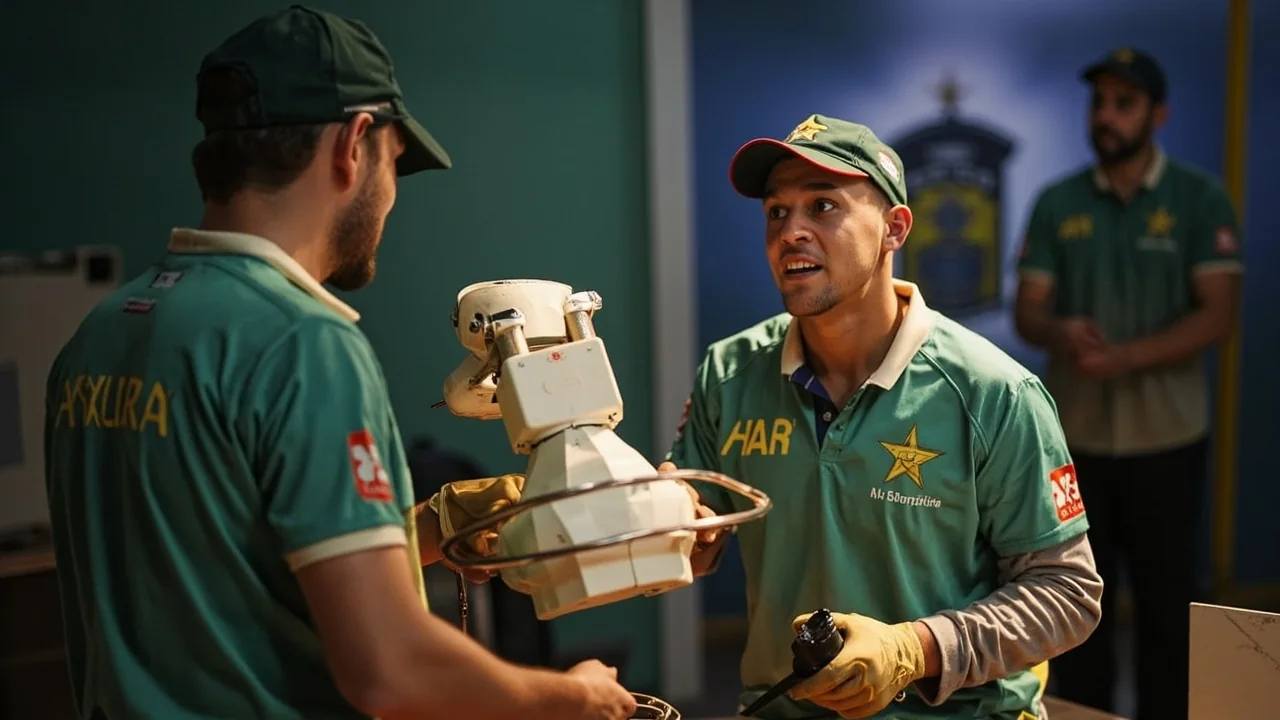
How India's selectors are reading the calendar matters as much as how McDonald is reading it. India do not need to be told that the Border-Gavaskar Trophy now sits inside the white-ball cycle. The BCCI's fixture template has been pushing red-ball and white-ball windows closer to each other for several seasons. The 2027 schedule is the point at which that compression becomes a planning problem rather than a scheduling quirk.
For India, the camp template McDonald is using is also a model worth studying. A closed training block that absorbs the selection decision, the spin combination and the workload split is a more efficient use of the window than a tour-match schedule that exposes all three. Other touring sides will study the same template when India next host a Test series, and the BCCI's tour-match template is the document most likely to be revised in response.
The T20 World Cup schedule that follows the India tour will not wait for the Ahmedabad Test to finish. Squad selection conversations start in February 2027, not in April. McDonald's camp call has bought the selectors the room to run those conversations from inside the Test window rather than after it. The white-ball implication of a Test-cricket decision is the part of the call the desk is logging for the next squad meeting.
The three documents the desk is watching next
The first document is the camp location. McDonald left the door open on three options. A camp in Bengaluru gives access to the National Cricket Academy's indoor and outdoor facilities and the altitude-adjacent training the centre is set up for. A camp in the UAE gives sub-continental-like surfaces in a controlled environment away from the Indian media cycle. A camp inside India gives squad acclimatisation but increases the visibility of selection calls before the first Test.
The second document is the squad announcement. Australia's Test squad for the 2027 series has not been named. The selectors are working through the New Zealand home series first, and the squad that flies to India will be the one that comes out of that series plus the players who fit the spin-reserve template the camp is being built around. The T20 World Cup squad that comes after the series will be drawn from that group, not from the group that toured the sub-continent in 2024.
The third document is the white-ball calendar that sits behind March 3, 2027. The fixtures Australia and India play after the Ahmedabad Test will set the selection baseline for the next T20 World Cup squad. McDonald's camp call is, in that sense, a decision about the lead time on that squad. A camp without a tour match is a decision to put the white-ball cycle ahead of the red-ball fixture template. The T20 World Cup squad that comes out the other end of it will reflect that choice.
What readers are asking about the Border-Gavaskar 2027 camp call
What did Andrew McDonald announce on August 5, 2026?
Australia head coach Andrew McDonald confirmed that his side will skip practice matches before the five-Test Border-Gavaskar Trophy 2027 in India. He named an extended training camp tailored to Indian conditions as the substitute and did not announce a camp location, a squad or the spin-bowling reserves.
Why is the no-warm-up choice unusual for an Australia tour of India?
The BCCI's standard fixture template has long allowed two, sometimes three, day-night practice matches before a Test series. Australia have used that template on every recent India tour, alongside pre-tour camps in the UAE and Bengaluru. The 2027 camp is the substitute, not the supplement, and McDonald's call is the first time in over a decade that an Australia head coach has walked into a Nagpur-Chennai-Guwahati-Ranchi-Ahmedabad rotation without a tour match.
Where will the 2027 training camp be held?
The 2027 camp location has not been confirmed. Australia have, on past tours, held pre-tour camps in the UAE and Bengaluru. A camp in Bengaluru gives access to the National Cricket Academy facilities. A UAE camp gives sub-continental-like surfaces in a controlled environment away from the Indian media cycle. A camp inside India gives squad acclimatisation but increases the visibility of selection calls.
What is the Border-Gavaskar Trophy 2027 schedule?
The five-Test series runs from January 21 to March 3, 2027. First Test: Nagpur, January 21 to 25. Second Test: Chennai, January 29 to February 2. Third Test: Guwahati, February 11 to 15. Fourth Test: Ranchi, February 19 to 23. Fifth Test: Ahmedabad, February 27 to March 3.
When did Australia last win a Test series in India?
Australia have not won a Test series on Indian soil since the 2004-05 season. The 2027 tour is the first five-Test Border-Gavaskar Trophy in India in 57 years and arrives at the end of a run of five tours without a series win in the country.
How does the camp call connect to the T20 World Cup squad window?
The T20 World Cup squad for the next cycle will be drawn from the players who come through the India tour. A camp without a tour match is a decision to manage that workload before the white-ball cycle that opens on March 4, 2027, the morning after the Ahmedabad Test ends.
What comes before the India tour in Australia's schedule?
Australia finish a four-Test home series against New Zealand before flying out. The India squad may differ from the one that finishes the New Zealand series, with the camp absorbed into the selection decision rather than exposed in a tour match the press would have watched session by session.
The editorial standards we work to
Every page on comesportsnow sits on the same five editorial principles: sourced claims, named by-lines, visible timestamps, dated corrections and disclosed conflicts. The five principles are not aspirational; they are the gate every page passes through before it goes live.
Sourced claims
Every claim that can be checked against a named source is checked. If we cannot source a claim, we do not publish it.
Named by-lines
Every by-line belongs to the reporter who filed the copy. We do not run anonymous syndication or AI-only by-lines.
Visible timestamps
Every article shows when it was filed and when it was last verified. Updates carry their own timestamps.
Dated corrections
Corrections are published within 24 hours of confirmation and recorded on the corrections log.
Disclosed conflicts
Reporters disclose any personal connection to a team, competition or story. The disclosure appears at the bottom of the article when it applies.
Coverage built for readers who follow for the love of the game
Most of our readers follow the game because they care about the shape of the side, the form of the player, the captaincy call that swung a match. They do not place a wager, and they do not need a betting angle to justify their interest.
Our coverage is built for them. The desk treats live scores as the starting point, not the headline. The desk publishes the supporting and counter evidence alongside every prediction. The desk does not run odds widgets, does not take bookmaker partnerships and does not run a paid tipster subscription.
If you follow sport for the love of the game, our coverage is built for you.
One short email when a match turns
The alerts desk sends up to three emails per match you follow: kick-off, in-game change of state and full-time summary. No filler, no sponsored content, unsubscribe in one click.
Subscribe to match alerts
Pick the sports and competitions you follow. We don’t share or sell the address.